Dates: February 17–19
Location: Chitwan National Park, Terai Lowlands, Nepal
Team: Daxyata & Me (Guided by Bipin Dai & Avinash Dai)
We originally planned for a quick two-day trip starting on February 17, with Pokhara as our next destination. But Chitwan has a way of anchoring you. By the end of our second afternoon, Daxyata and I realized two days weren't nearly enough to absorb the vibrant avian life around us. We extended our stay by another night, changing our plans without a single regret.
Chitwan was a true sanctuary, a haven where the noise of daily routines quieted down, replaced by river calls, wingbeats, and the golden hues of the Terai lowlands.
Part 1: The Jeep Safari & Finding Joy in the Details
It’s easy to get swept up in tiger fever when you’re in Chitwan, and naturally, most of the safari group was searching for big cats in the bush. We definitely shared that excitement, but we quickly realized our hearts were set on something else. We found ourselves constantly distracted by the foliage above and the water’s edge. Bipin Dai, our guide for the jeep safari, picked up on our enthusiasm right away, turns out he’s an avid birder, too. Instead of just driving past, he took the time to point out every call, movement, and hidden feather he spotted.
The open forest and grasslands came alive:
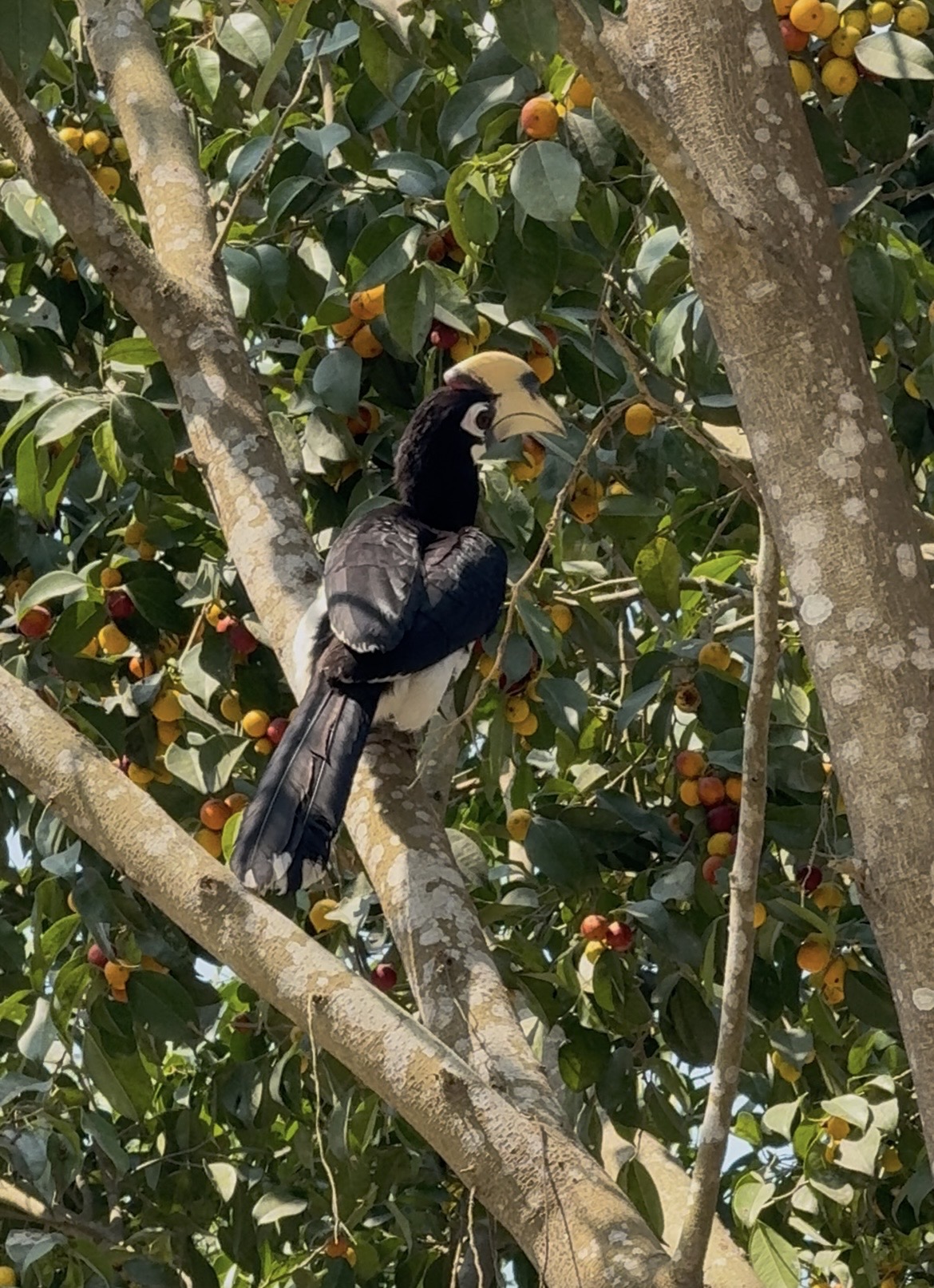
- In the Canopy: Bright flashes of Plum-headed Parakeets (Psittacula cyanocephala) and Red-breasted Parakeets (Psittacula alexandri), alongside the booming calls of the Lineated Barbet (Psilopogon lineatus) and the dramatic bill of the Oriental Pied Hornbill (Anthracoceros albirostris).
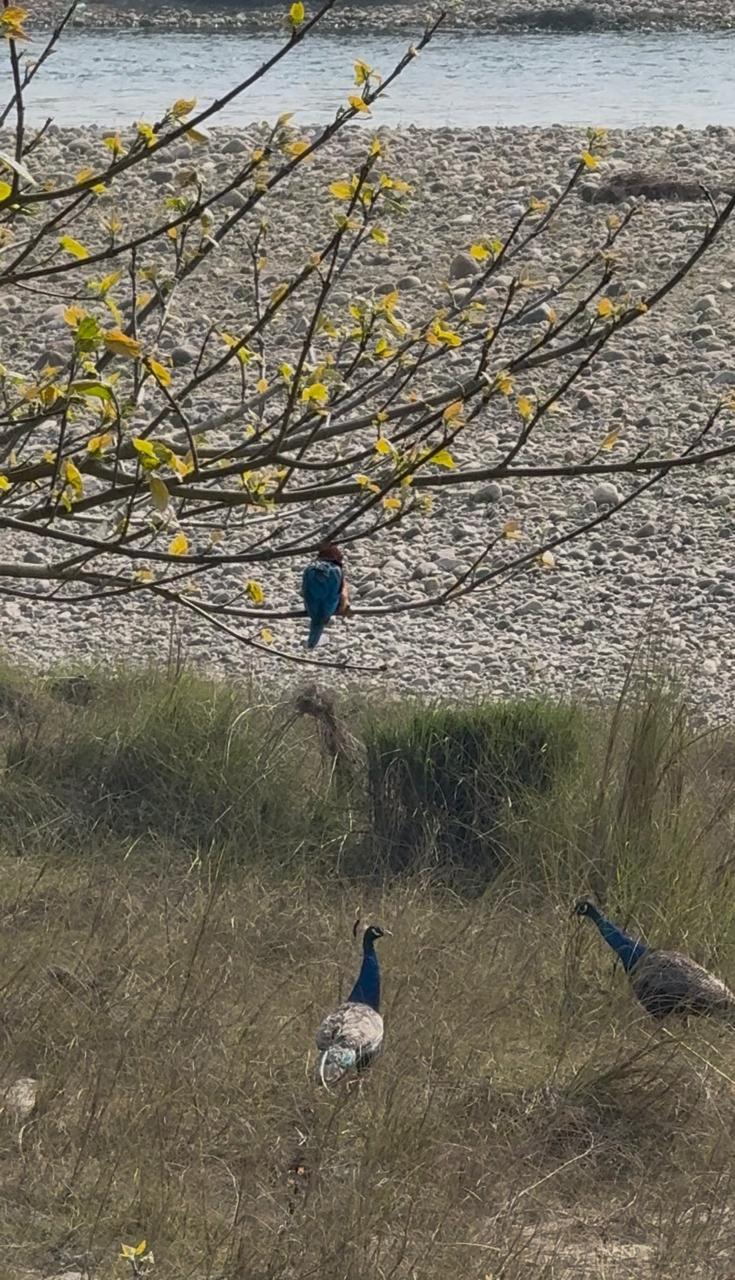
- Along the Forest Floor: Red Junglefowl (Gallus gallus), the wild ancestor of domestic chickens, strutted through the leaf litter alongside vibrant Indian Peafowl (Pavo cristatus).
- On the Prowl: High above, a Crested Serpent Eagle (Spilornis cheela) scanned the undergrowth, while an Osprey (Pandion haliaetus) watched the river channels.
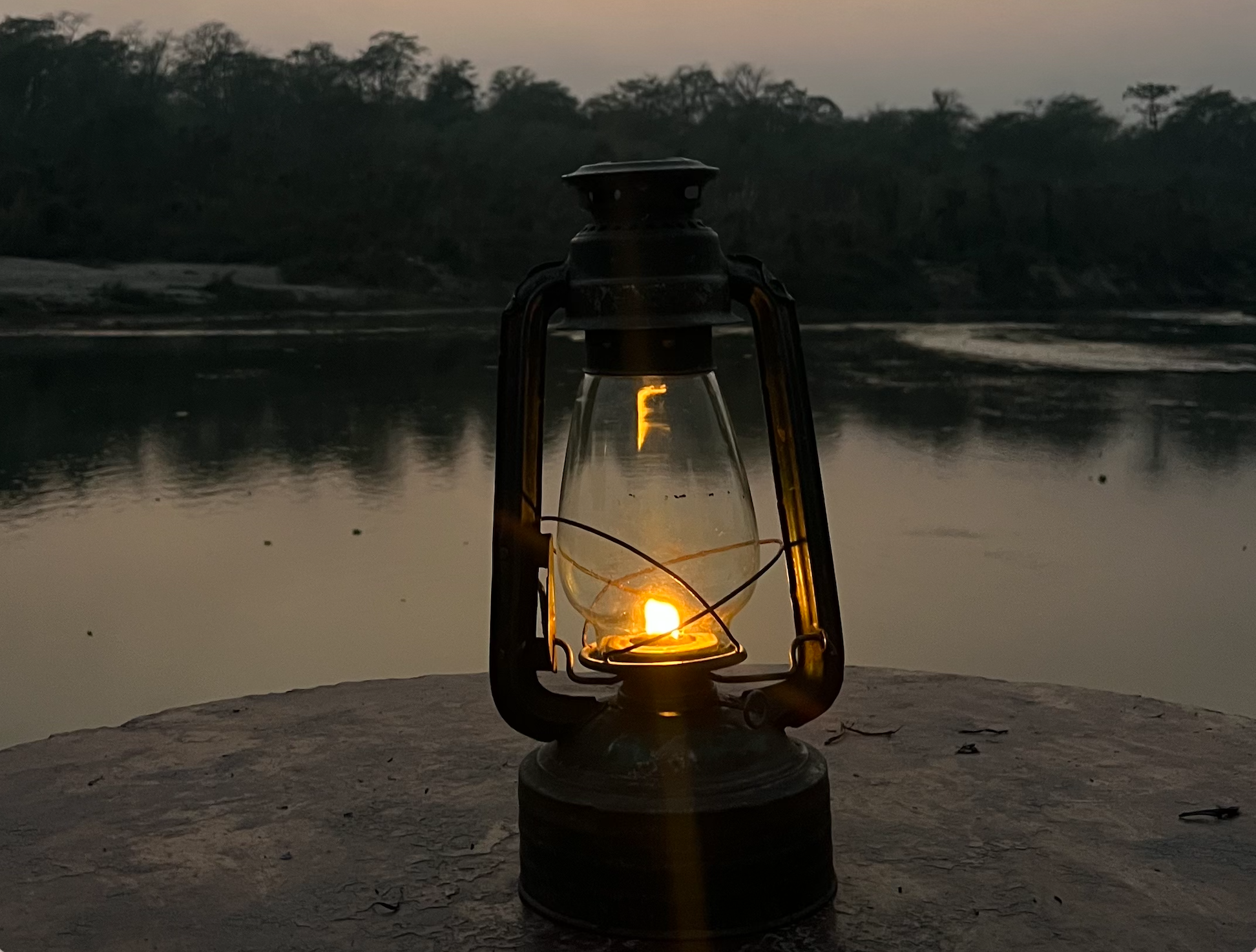
As the sun began to dip, we settled onto the shores of the Rapti River. Terai sunsets hit differently, the sky bleeds orange, amber, and deep violet over the water. Along the banks, we watched Ruddy Shelducks (Tadorna ferruginea) glistening in the twilight, while Bar-headed Geese (Anser indicus) rested along the gravel bars after their trans-Himalayan migration.
Part 2: Crossing the Rapti & The Jungle Walk
Seeing our genuine curiosity, Bipin Dai offered a suggestion: "If you really want to experience the birds, you need to be on foot."
The next morning, we met Bipin Dai and Avinash Dai at the riverbank. The plan was a 4-hour walk through a secluded section of the core jungle, accessible only by crossing the Rapti in a narrow wooden canoe.
The River Crossing & Wildlife Dynamics
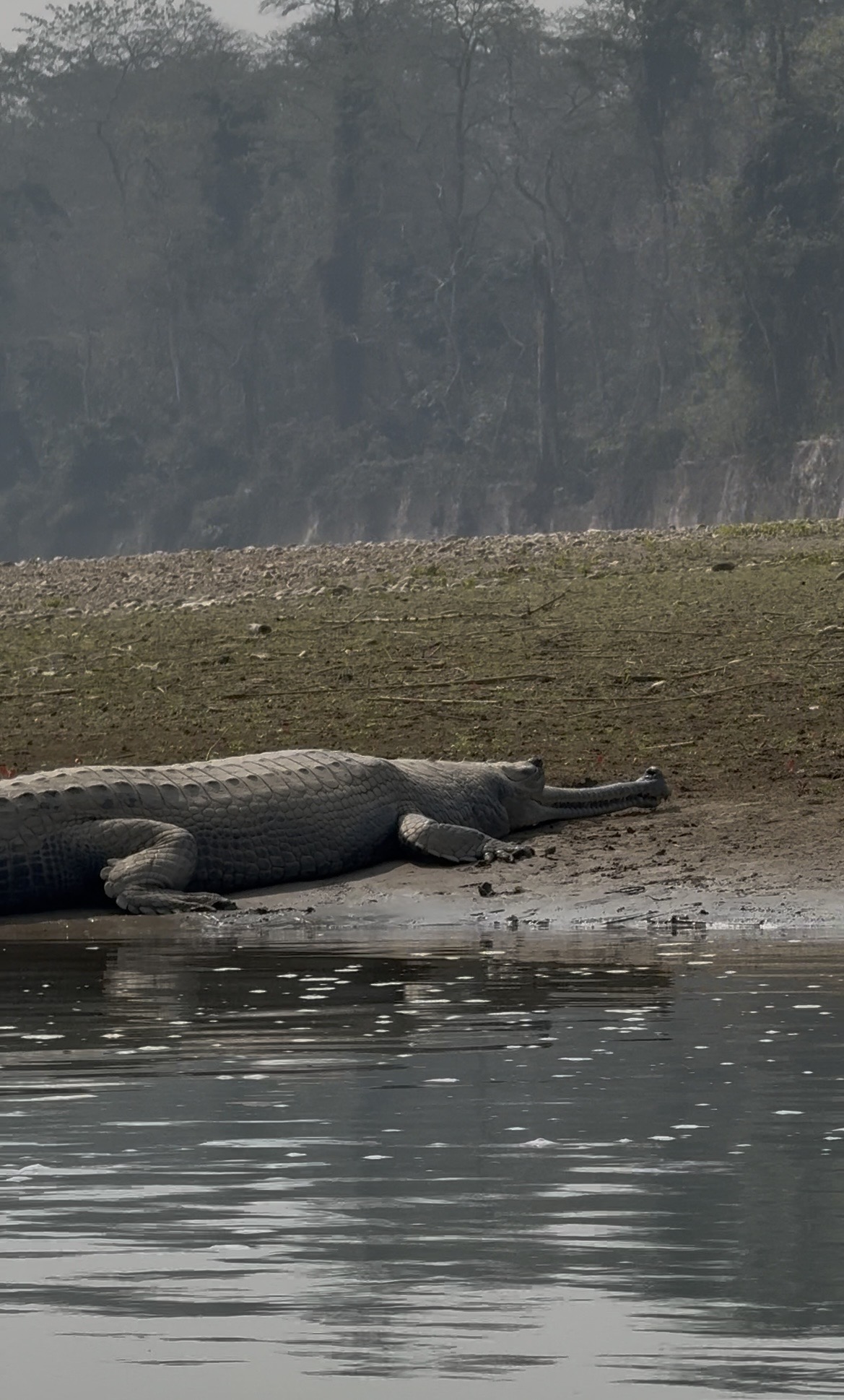
As we paddled across the tranquil water, we spotted Chitwan’s famous reptiles basking on the sandbanks.
Ecological Note: Nepal is home to two distinct crocodilian species seen in Chitwan’s river systems:
- Gharial (Gavialis gangeticus): The critically endangered, long-snouted fish-eater optimized for river currents.
- Mugger Crocodile (Crocodylus palustris): The broad-snouted apex predator that feeds on fish, waterbirds, and small mammals.
Mid-river, the peaceful atmosphere shifted. Two massive One-horned Rhinoceroses (Rhinoceros unicornis) were engaged in a territorial clash on the shore. While floating in the water felt safe initially, our guides reminded us of an important safety fact: the losing rhino often retreats straight into the river, capable of charging through deep water and flipping a canoe without hesitation. We watched from a safe distance as the losing bull thundered away into the high elephant grass.
Setting Foot in the Core Zone
Once ashore, our guides laid down the rules of walking in tiger and rhino territory:
- Keep quiet and walk single-file.
- If a Rhino charges: Climb a sturdy tree immediately. If no tree is near, run in a zigzag pattern through thick brush.
- If a Tiger or Sloth Bear approaches: Do not run. Stand your ground, stay together to look bigger, and slowly back away facing the animal.
Walking on foot changes your perception entirely, every snap of a twig sharpens your senses. Deep in the forest, we came across the carcass of an old rhino that had passed away during the 2022 pandemic years, a reminder of the natural life cycles defining this ecosystem.
Among the dense Sal trees and bamboo thickets, smaller forest species began to reveal themselves:
- Understory & Warblers: Puff-throated Babblers (Pellorneum ruficeps) rustling in the leaf litter, Hume’s Leaf Warblers (Phylloscopus humei), and the tiny Common Tailorbird (Orthotomus sutorius).
- Canopy Jewels: The striking Grey-headed Canary-flycatchers (Culicicapa ceylonensis) fluttering through the shadows, alongside Chestnut-tailed Starlings (Spodiopsar malabaricus).
Complete Trip Checklist: 72 Avian Species
Here is the systematic record of all 72 species identified across our 48 hours in Chitwan National Park:
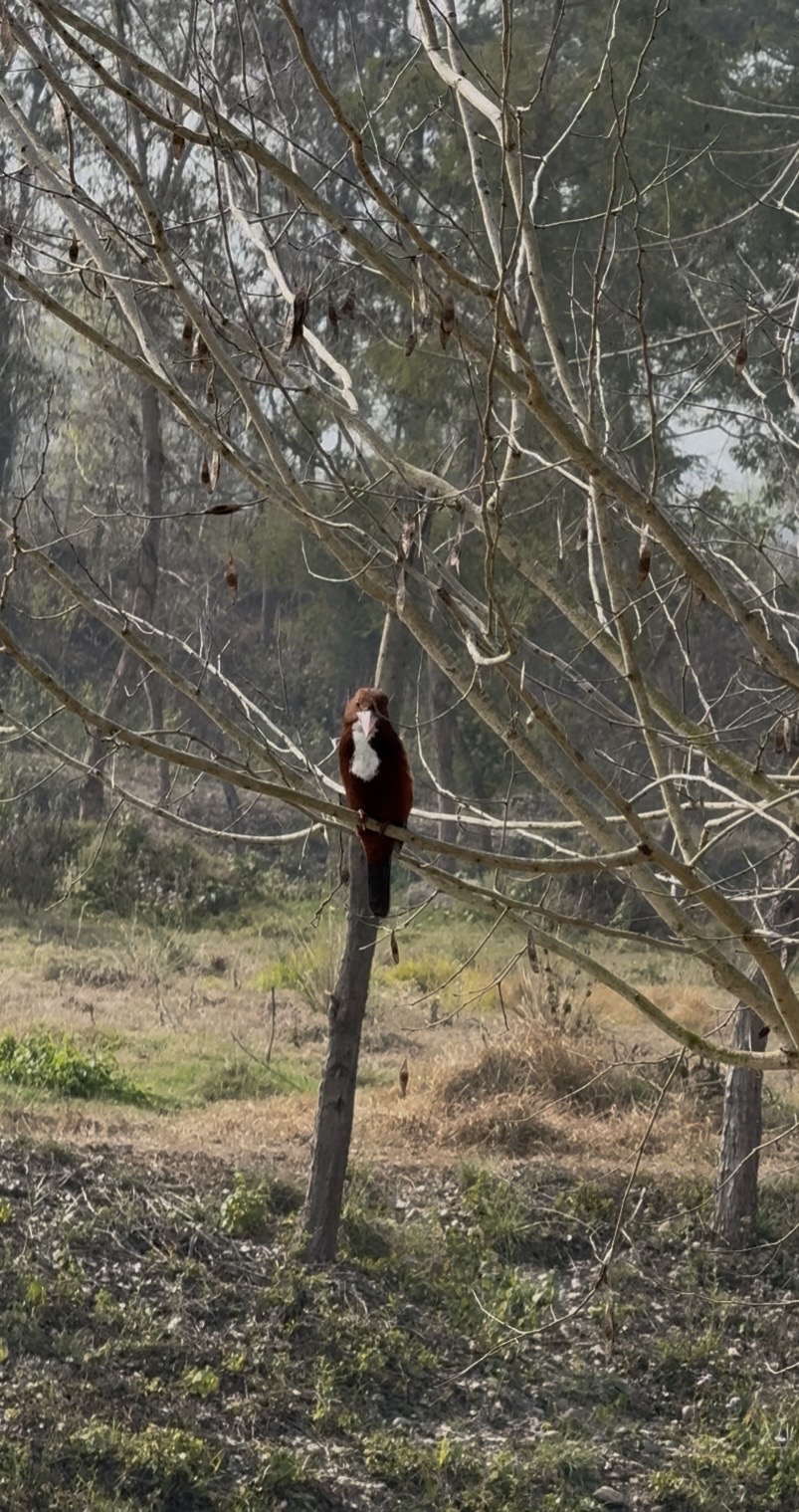
| Family / Group | Species Sighted | | Waterfowl (Anatidae) | Bar-headed Goose, Ruddy Shelduck, Mallard, Common Merganser | | Storks & Ibises | Asian Openbill, Lesser Adjutant, Red-naped Ibis | | Herons, Egrets & Bitterns | Grey Heron, Great Egret, Intermediate Egret, Little Egret | | Cormorants & Darters | Little Cormorant, Great Cormorant, Oriental Darter | | Raptors (Accipitridae & Pandionidae) | Osprey, Crested Serpent Eagle | | Rails, Plovers & Sandpipers | White-breasted Waterhen, River Lapwing, Red-wattled Lapwing, Little Ringed Plover, Common Sandpiper | | Pigeons & Doves | Spotted Dove, Common Pigeon | | Parrots & Parakeets | Rose-ringed Parakeet, Plum-headed Parakeet, Red-breasted Parakeet | | Cuckoos & Malkohas | Greater Coucal, Green-billed Malkoha | | Kingfishers & Bee-eaters | Green Bee-eater, White-throated Kingfisher, Common Kingfisher, Pied Kingfisher | | Barbets & Hornbills | Lineated Barbet, Coppersmith Barbet, Great Barbet, Brown-headed Barbet, Oriental Pied Hornbill | | Woodpeckers | Fulvous-breasted Woodpecker, Greater Yellownape | | Shrikes & Orioles | Long-tailed Shrike, Grey-backed Shrike, Indian Golden Oriole, Black-hooded Oriole | | Drongos & Ioras | Greater Racket-tailed Drongo, Black Drongo, Common Iora | | Crows & Martins | Indian Jungle Crow, Plain Martin | | Bulbuls & Prinias | Grey-breasted Prinia, Red-whiskered Bulbul, Red-vented Bulbul | | Warblers & Babblers | Hume’s Leaf Warbler, Green Warbler, Puff-throated Babbler, Common Tailorbird | | Starlings & Mynas | Common Hill Myna, Jungle Myna, Common Myna, Chestnut-tailed Starling | | Thrushes & Flycatchers | Oriental Magpie-Robin, Pied Bushchat, Taiga Flycatcher, Common Stonechat, Grey-headed Canary-flycatcher | | Sunbirds, Wagtails & Sparrows | Black-throated Sunbird, Grey Wagtail, White-browed Wagtail, White Wagtail, House Sparrow, Eurasian Tree Sparrow |
Final Reflection
Extending our trip to stay on foot in Chitwan redefined how I look at wildlife. When you stop chasing the elusive "big goals" like a tiger sighting, the wilderness opens up in unexpected ways, from the rhythm of a kingfisher hovering above the Rapti to the subtle alarm calls of drongos in the Sal forest.
Chitwan turned out to be more than just a trip stop; it was a reminder to stay present, slow down, and notice the life thriving right in front of us.